
When a Sensor Fails, Production Stops
PSI Technics GmbH – Reading time approx. 6 minutes – Sensor Protection – TPCC – Thermo Protection Cooling Case – Laser Distance Sensors – Intralogistics
How the TPCC Keeps Optical Sensors Running at +176°F, –40°F, and in Dust
Sensitive optical sensors – laser distance meters, scanners, barcode readers, cameras – are the eyes of modern automation. But heat, cold, dust, and weather take their toll. The TPCC sensor protection case family from PSI Technics prevents costly production downtimes, extends diode life-span, and guarantees measurement accuracy – where sensors previously could not survive, or survived only briefly.
The Problem: Sensors at Their Limits
A laser distance sensor in a steel production hall is exposed to radiant heat well above 122°F (50°C). A scanner in a cold storage warehouse works at –22°F (–30°C). A barcode reader in a cement plant is buried in dust. The result is always the same: the sensor fails, delivers inaccurate readings, or reaches only a fraction of its intended life-span.
And every sensor failure means production downtime, repair costs, and delivery delays. In facilities running around the clock, these failures quickly add up to significant sums.
The obvious solution – more expensive specialty sensors – is often unavailable or uneconomical. The better solution: protect the existing, proven sensor so it works reliably even under extreme conditions.
Protected by an enclosure, optical sensors can now be used where radiant heat, high or low temperatures, or adverse weather previously prevented their use or significantly reduced their life-span.
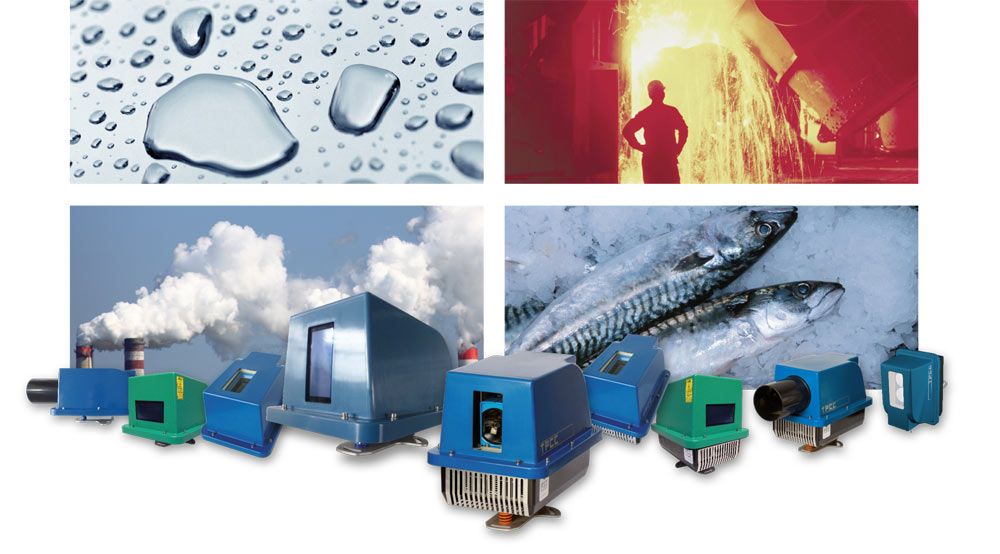
The PSI Technics sensor protection case family in its variants – engineered for extreme conditions: moisture and weather, radiant heat of the metal industry, dust and fumes, and cold in cold storage and deep-freeze warehouses.
The Solution:
The PSI Technics Sensor Protection Case Family
PSI Technics offers four coordinated protection solutions that provide optimal protection depending on the environmental condition – from extreme heat through extreme cold to dust and weather.
They all share one goal: to protect sensitive optical sensors so that they reach their full performance and life-span – regardless of the environmental conditions.
TPCC – Cooling Case
up to +80°C
(176°F)
Optimum protection at high ambient temperatures and radiant heat.
TPCC-H – Heated Version
down to –40°C
(–40°F)
Integrated heating for use in cold storage warehouses.
TPCC-CH – Cooling & Heating
–20°C to +75°C
(–4°F to 167°F)
Combined function for strongly fluctuating temperatures.
Protection Case – Weather & Dust
Mechanical protection against dust, humidity and weather.
THE CORE:
THERMO PROTECTION COOLING CASE (TPCC)
The innovative TPCC protects sensitive optical sensors such as laser distance meters or optical data transfer systems from excessive heat (up to +176°F / +80°C) or low temperatures (down to –40°F / –40°C), as well as from extreme temperature fluctuations – in logistics and production alike. Thermoelectric cooling controls the temperature inside the housing, significantly increasing diode performance while avoiding cost-intensive maintenance, repairs, and downtimes.
Iron, Steel & Aluminum
Automotive Industry
Aerospace Industry
Paper Industry
Food Industry
Surface Technology
Ceramics & Glass
Cold Storage Warehouses
General Logistics
Extensive technical know-how and years of experience enable a wide variety of applications – wherever sensors must work under harsh conditions.
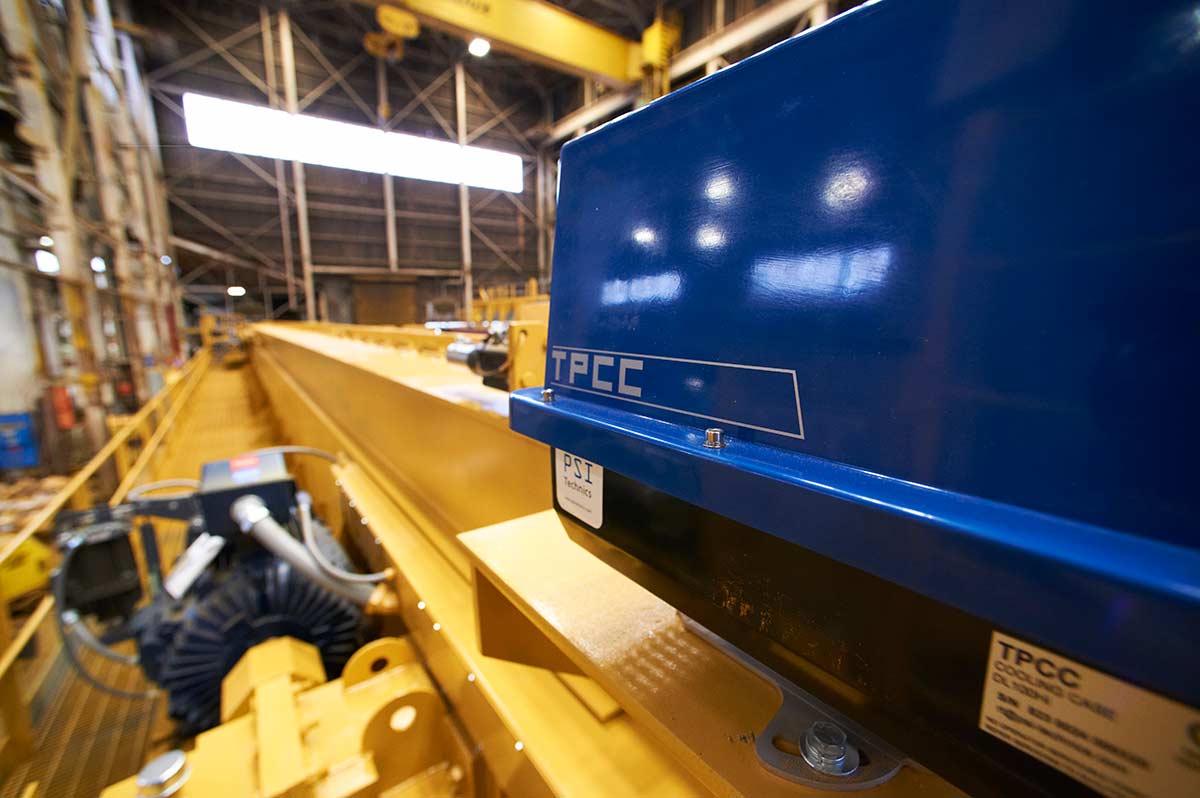
Whether the radiant heat of a steel foundry, the cold of a deep-freeze warehouse, or the dust of a cement plant – the TPCC family makes sensor deployment possible where it was previously unthinkable. A typical example is the protection of sensors on industrial cranes in the logistics of a steel plant.
The Numbers:
How Much Longer Sensors Last
The impact of temperature protection on sensor life is dramatic – and measurable. Compared with a manufacturer’s stated MTTF (Mean Time To Failure) of 50,000 hours at +77°F (+25°C):
+15 %
life-span vs. 50,000 h MTTF at +77°F (+25°C)
+440 %
diode life-span at +113°F (+45°C)
2.5 yrs
average payback period
+167°F
extended operating range (+75°C)
The principle is simple:
The higher the ambient temperature, the greater the benefit. At temperatures above +77°F, the TPCC extends the life of laser sensors – and at +113°F (+45°C) it increases the life-span of sensor diodes by up to 440 %. On average, the TPCC pays for itself after only 2.5 years.
“No malfunctions occurred after the TPCC was installed, and downtimes caused by sensor malfunctions were completely eliminated. The TPCC perfectly protects the SICK DT500 sensor from heat, effectively preventing measurement errors. The sensor’s susceptibility to the high radiant heat that previously led to a loss of production was completely remedied, and BMW’s investment in the TPCC paid off very quickly.”
— Günter Sommerer, Equipment Planning, BMW AG, Landshut Factory, Germany
Protection Against Weather and Dust
Not every challenge is about temperature. The PSI Technics Sensor Protection Case provides mechanical protection for sensor components against dust, humidity, and inclement weather – designed for pulse emitters such as laser distance meters and optical data light barriers in industrial applications.
COMPACT, ROBUST, IP65
The compact form allows for easy on-site integration, with protection up to IP65 when mounted horizontally. Made of modern, lightweight material, it requires no electrical installation and offers easy alignment of the Y/X axes – with SKINTOP CUBE cable feeds and models suitable for most industrial applications.
Award-Winning Innovation
INNOVATION SUCCESS AWARD 2008
The TPCC developed by PSI Technics is a proven industrial enclosure designed to protect temperature-sensitive sensors. In October 2008, PSI Technics was awarded the “Innovation Success Award” by the Investitions- und Strukturbank Rheinland-Pfalz (ISB GmbH) for developing this innovative protective enclosure.
See the TPCC in Action
From Setup to How It Works
The two short videos illustrate both: how easily the enclosure integrates into existing measuring systems — with no additional installation effort — and how the protective mechanism inside reliably shields sensitive optical sensors from heat, cold, and dust.
Video 1 – Setup of the TPCC and simple installation of the sensor
Video 2 – Mounting, benefits, and mode of operation of the TPCC
Who These Solutions Are Especially Relevant For
The Question That Counts
Are there points in your production or logistics where sensors fail regularly – or where you avoid certain sensors altogether because the environment is too hot, too cold, or too dusty? How often have you had to replace sensors due to premature wear?
This is exactly where the TPCC family comes in. Instead of expensive specialty hardware or recurring failures: a proven protection case that keeps your existing sensors running reliably – maintenance-free, independent of manufacturer, and easy to integrate.
Are your sensors failing where it’s too hot, too cold, or too dusty?
Contact us for recommendations on how the right sensor protection case prevents costly production downtimes and significantly extends the life of your optical systems – for your specific environment.
Email: support@psi-technics.com
Phone: +49 (0) 2630 91590-0
Frequently Asked Questions (FAQs)
A sensor protection case is a protective enclosure that shields sensitive optical sensors – such as laser distance meters, scanners, barcode readers, and cameras – from heat, cold, dust, and inclement weather. This allows sensors to operate reliably even under extreme conditions and reach their full life-span and measurement accuracy.
TPCC stands for Thermo Protection Cooling Case – an industrial enclosure developed by PSI Technics to protect temperature-sensitive optical sensors from high and low temperatures as well as extreme temperature fluctuations. It uses a thermoelectric cooling effect and is maintenance-free.
The TPCC family covers a wide range: the TPCC cooling case protects at high ambient temperatures up to +176°F (+80°C), the TPCC-H heated version protects at low temperatures down to –40°F (–40°C), and the TPCC-CH combined cooling-and-heating version covers strongly fluctuating temperatures from –4°F to +167°F (–20°C to +75°C). The PSI Technics Sensor Protection Case additionally protects against dust and weather with an IP65 rating.
Compared with a manufacturer’s stated MTTF of 50,000 hours at +77°F (+25°C), the TPCC increases laser sensor life-span by 15 %. At an ambient temperature of +113°F (+45°C) it increases the life-span of sensor diodes by up to 440 %. The higher the temperature, the greater the benefit – and on average the TPCC pays for itself after only 2.5 years.
The protection cases are compatible with sensor systems of most major brands. Protected sensors include laser distance meters, optical data transfer systems, scanners and barcode readers, and cameras. The TPCC is also fully customizable and has been adapted for uses such as radio-receiver and battery cooling.
Typical applications include the metal industry (iron, steel, aluminum), automotive and aerospace industries, paper and food industries, surface technology, ceramics and glass production, cold storage warehouses, and general logistics – wherever sensors must operate under heat, cold, dust, or radiant heat.
Yes. The TPCC uses maintenance-free thermoelectric cooling and integrates easily into existing measuring systems with no additional electrical installation required. The Sensor Protection Case offers protection up to IP65 when mounted horizontally and allows easy alignment of the sensor axes.
Yes. Sensor failures caused by high or low temperatures, temperature fluctuations, dust, or weather lead to production downtime and repair costs. At BMW’s Landshut factory, for example, downtimes caused by sensor malfunctions were completely eliminated after a TPCC was installed to protect a SICK DT500 sensor from radiant heat.
Yes. In October 2008, PSI Technics was awarded the “Innovation Success Award” by the Investitions- und Strukturbank Rheinland-Pfalz (ISB GmbH) for developing the TPCC, a proven industrial enclosure for protecting temperature-sensitive sensors.
Yes. Two short videos show the thermo protection enclosure in practice: the first video explains the setup of the TPCC and the simple installation of the sensor, while the second shows mounting, benefits, and how it works. They demonstrate how easily the enclosure integrates into existing measuring systems without additional installation effort, and how the protective mechanism inside shields sensitive sensors from heat, cold, and dust.