
Your Installation Is Aging – Does That Mean You Have to Replace It?
PSI Technics GmbH – Reading time approx. 6 minutes – Modernization – Retrofitting – Intralogistics – Performance Analysis – Stacker Cranes – Bridge Cranes
Your Installation Is Aging – Does That Mean You Have to Replace It?
In logistics, industrial machines are critical for the production throughput of goods – and over time they become prone to failures. PSI Technics helps you optimize the performance of your stacker cranes, bridge cranes, and automated conveyor systems: from analyzing actual conditions through modernization to maintenance. Objectively, and for machines of all makes and models.
The Dilemma: Replace or Keep Running?
An intralogistics installation has run for 15 years. It works – but failures are becoming more frequent, throughput fluctuates, and spare parts are harder to source. Sooner or later the question arises: invest in a complete replacement, or keep going and hope for the best?
Both paths are expensive. A new purchase ties up significant capital and means long downtimes. Simply continuing to operate leads to rising maintenance costs, unplanned failures, and declining productivity.
There is a third path: targeted modernization. It combines the best of both options – the proven mechanical base is retained, while control, drives, and regulation are brought up to the current standard. The result: higher availability, shorter cycle times, and noticeably reduced costs.
Predicting and avoiding defects in new and existing installations saves you money in the long run. Modernization is often the more economical path than a complete replacement.
What Modernization with PSI Technics Delivers
By providing sustainable energy savings and reducing facility wear, PSI Technics optimizes both process costs and maintenance requirements. Improving the mechanical design and replacing inefficient drive or control technology leads to higher machine availability, material savings, and shorter cycle times.
Increased Throughput
Higher machine availability
Less Energy
Sustainable savings
Less Wear & Tear
Lower maintenance needs
Shorter Cycle Time
Faster motion sequences
What Sets This Apart
PSI Technics examines your entire logistics system, instead of merely focusing on particular components – and does so independent of the make or model of your installation: automated storage and retrieval systems (AS/RS) / stacker cranes, crane systems / overhead bridge cranes, and conveying, lifting, and material-handling systems such as transfer cars, elevators, or hoists.
Step 1:
Performance Analysis
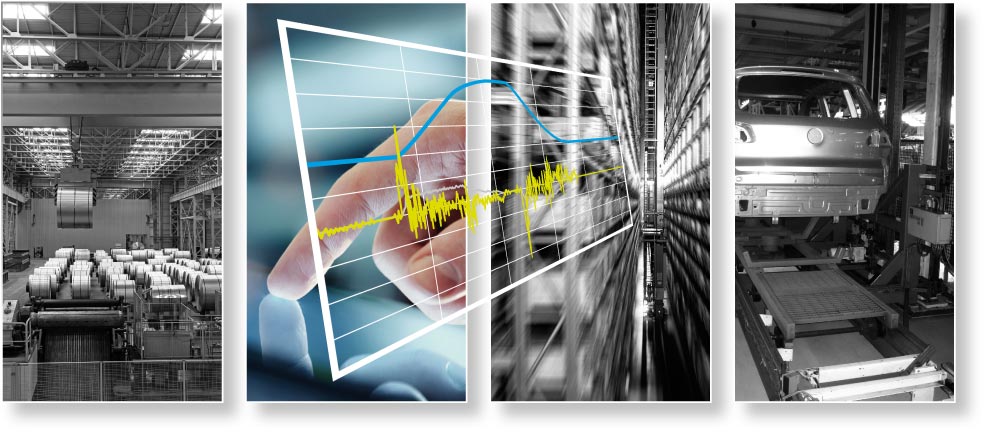
It starts with understanding. Latent weak spots can lead to significant problems – crane mast oscillations, throughput fluctuations, or inaccurate measurements. As a first step, PSI Technics analyzes the baseline performance of your machines to determine the potential for optimization and reduced energy consumption.
A dedicated motion-analyzing capability provides a comprehensive analysis of system performance and identifies issues that impact it. Using the motion profile, it pinpoints sources of interference that adversely affect productivity – with graphical representation of the motion sequence.
PLAN AHEAD INSTEAD OF REACTING
For your planning security, PSI Technics also evaluates the condition of existing components that could become weak spots in the near future – for example, when spare-part procurement becomes problematic. This lets you avoid costly disruptions before they occur.
The analysis translates into targeted measures: frequency converter optimization, motor fine-tuning, optimization of ramps, switching from static to dynamic travel profiles, and modernizing system control. Your advantage: reduced costs and increased throughput.
PSI Technics then delivers a comprehensive report. It details which weak components to replace, presents the results as a time-optimized comparative simulation, and completes the picture with an energy-consumption analysis that identifies opportunities to cut usage and cost.
Step 2:
Virtual Modeling – a Glimpse into the Future of Your Installation
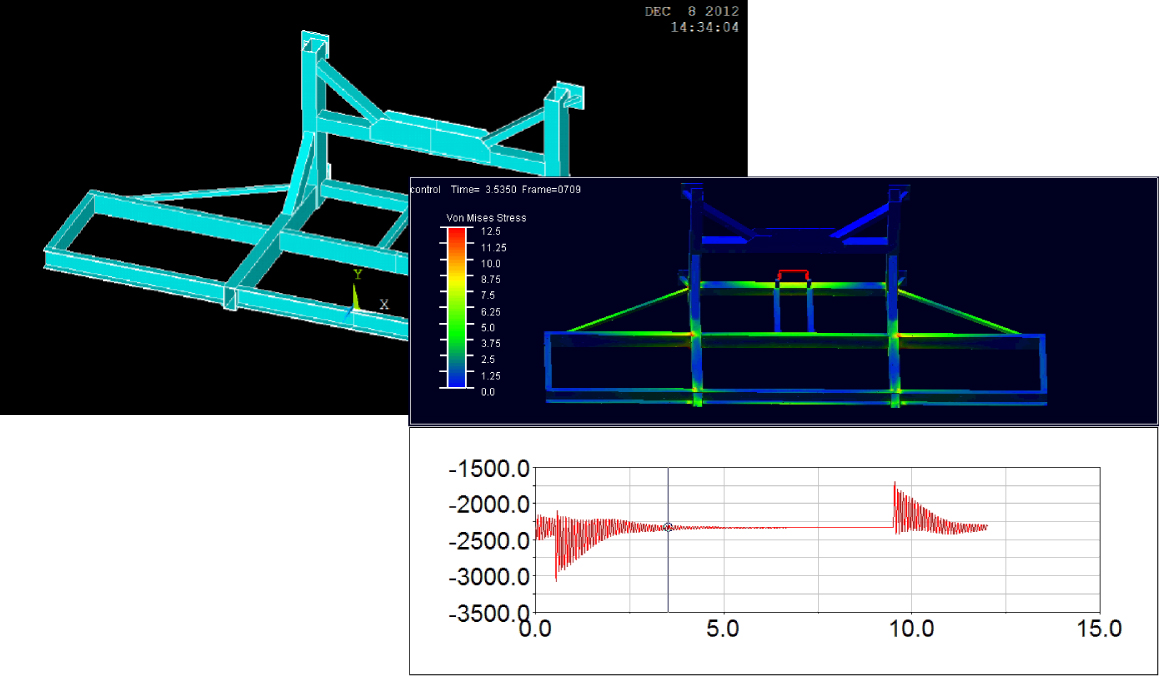
Virtual Modeling, based on the Finite Element Method (FEM), is an innovative service that gives you a glimpse into the future of your installation. For existing applications, PSI Technics creates computer models to pinpoint stress, strain, weak spots, and potential improvements.
For new applications, the expected system behavior is simulated before the actual installation – so potential interferences can be predicted and analytically detected. This lets you identify needed improvements early in the planning stage, and even compare designs from different providers objectively.
SAMPLE APPLICATION: VOLKSWAGEN AG
At a vertical material lift in a vehicle-body warehouse at Volkswagen AG, Virtual Modeling helped reveal previously hidden potential – an example of how loads and optimization opportunities can be detected analytically, before they turn into costly downtimes.
Step 3:
Modernizing the Positioning System
A common trigger for modernization: the existing positioning system is technically outdated or no longer supported by its manufacturer. A prominent example is the Trimble (Spectra Precision, Geotronics) ICS5000, TCS4000, and ASC positioning systems, discontinued when Trimble closed its Factory Automation department.
For exactly these cases, PSI Technics provides modern positioning solutions that replace existing installations – including those using distance sensors from SICK, Leuze, or Pepperl+Fuchs – quickly, easily, and economically. The interfaces are compatible; there is no need to replace existing controllers.
Compatible Interfaces
Existing communication protocols, I/O signals, and analog set-point values for motor drives can continue to be used – no complex process-control modifications required.
Modular Design
The solution installs flexibly and can be introduced gradually – ideal for distributing costs over time and minimizing downtime.
Multi-Axis Control
A separate distance meter and a separate digital host control several axes (x/y/z) simultaneously – faster and more flexible than a conventional PLC.
Training & Service
After the overhaul, PSI Technics trains your staff in maintenance and troubleshooting – for sustained high availability across all shifts.
Your Path to a Modernized Installation
For multiple-system applications, harsher environments, or when you prefer to turn over support and maintenance entirely, PSI Technics offers custom-tailored on-site services to ensure long-term high availability – regardless of the make or model of your installation.
When it comes to modernizing existing facilities, PSI Technics places particular emphasis on minimizing downtime – as the Bosch shuttle cars show, often no more than half a day per unit.
What Customers Report
Two voices from the field show how modernization plays out in practice – and what it achieves:
„PSI Technics’ staff is highly qualified and responsive. Due to the system’s integration flexibility, we were able to modernize three shuttle cars in the shortest possible time without changing any system components or drives. The modernization of each shuttle car didn’t take longer than half a day. We were so impressed with the increased efficiency that we already ordered ten additional systems – to replace older systems and to equip new installations.“
— Thomas Knebel, Maintenance Planner, Automotive Aftermarket, Robert Bosch GmbH, Karlsruhe, Germany
„We depended on the Trimble TCS4000 since 1995. When we heard production was to be discontinued, we needed to ensure the future of our warehouse logistics. Due to the modular design we were able to distribute the costs and gradually modernize the stacker cranes in our high-bay warehouse – replacing the previous units completely, without replacing existing system components or drives.“
— Marc Valkeneers, Technical Coordinator, SKF Tongeren, Belgium

Modernize Instead of Buying New — Is It Worth It?
Improving the mechanical design and replacing inefficient drive or control technology leads to higher machine availability, material savings, and shorter cycle times.
The Question That Counts
How old is your intralogistics installation – and do you know how much unused potential is still in it? Are failures increasing, is throughput fluctuating, or is spare-part procurement for your positioning system becoming steadily more difficult?
Then the first step is worth taking: a performance analysis. It shows objectively what your installation can still deliver – and whether modernization is the more economical path than a new purchase. In most cases, it is.
How old is your intralogistics installation – and how much potential is still in it?
Let our application engineers advise you at no cost and without obligation. We analyze your actual conditions and show you which modernization measures truly pay off – objectively and independent of the make or model.
Email: support@psi-technics.com
Phone: +49 (0) 2630 91590-0
Frequently Asked Questions (FAQs)
In most cases, yes. Modernization retains the proven mechanical base while renewing control, drives and regulation. This avoids the high capital cost and long downtime of a complete replacement, and instead delivers higher availability, shorter cycle times and reduced process and maintenance costs.
It follows three steps: a performance analysis records and analyzes motion sequences to reveal weak spots such as oscillations or throughput fluctuations; virtual modeling (Finite Element Method) pinpoints loads and optimization potential on a digital model; and modernization of the positioning system replaces outdated control and drive technology with minimal downtime.
Yes. PSI Technics provides global service, support, repairs and spare-part supply for Trimble (Spectra Precision, Geotronics) ICS5000, TCS4000 and ASC units, and can replace them with a modern positioning solution without changing existing system components or drives.
PSI Technics places particular emphasis on minimizing downtime. Modernization can take place during ongoing operation and be rolled out gradually. At Robert Bosch, for example, each shuttle car was modernized in no more than half a day, without replacing system components or drives.
A performance analysis records, analyzes and optimizes the motion sequences of an installation to identify performance and energy-saving potential. It examines the entire logistics system rather than individual components, and results in a report with a time-optimized comparative simulation and an energy-consumption analysis.
Virtual Modeling is a service that creates a digital model of an installation to predict its behavior. For existing systems it pinpoints stress, strain and weak spots; for new systems it simulates expected behavior before installation, so improvements can be made in the planning stage and designs from different providers compared objectively.
Yes. Thanks to the modular design, modernization can be distributed across installations and budgets – upgrading one machine at a time. SKF, for example, gradually modernized the stacker cranes in its high-bay warehouse this way.